


Specifics of wooden home design in the context of IT solutions
Wooden buildings are becoming increasingly popular not only for their aesthetics or eco-friendliness but also due to advanced technologies that are changing their design and construction processes. Today, an architectural idea alone is not enough—a successful project requires digital precision, structural knowledge, and the ability to work with modern tools. The properties of wood demand special attention to detail, and mistakes can be costly.
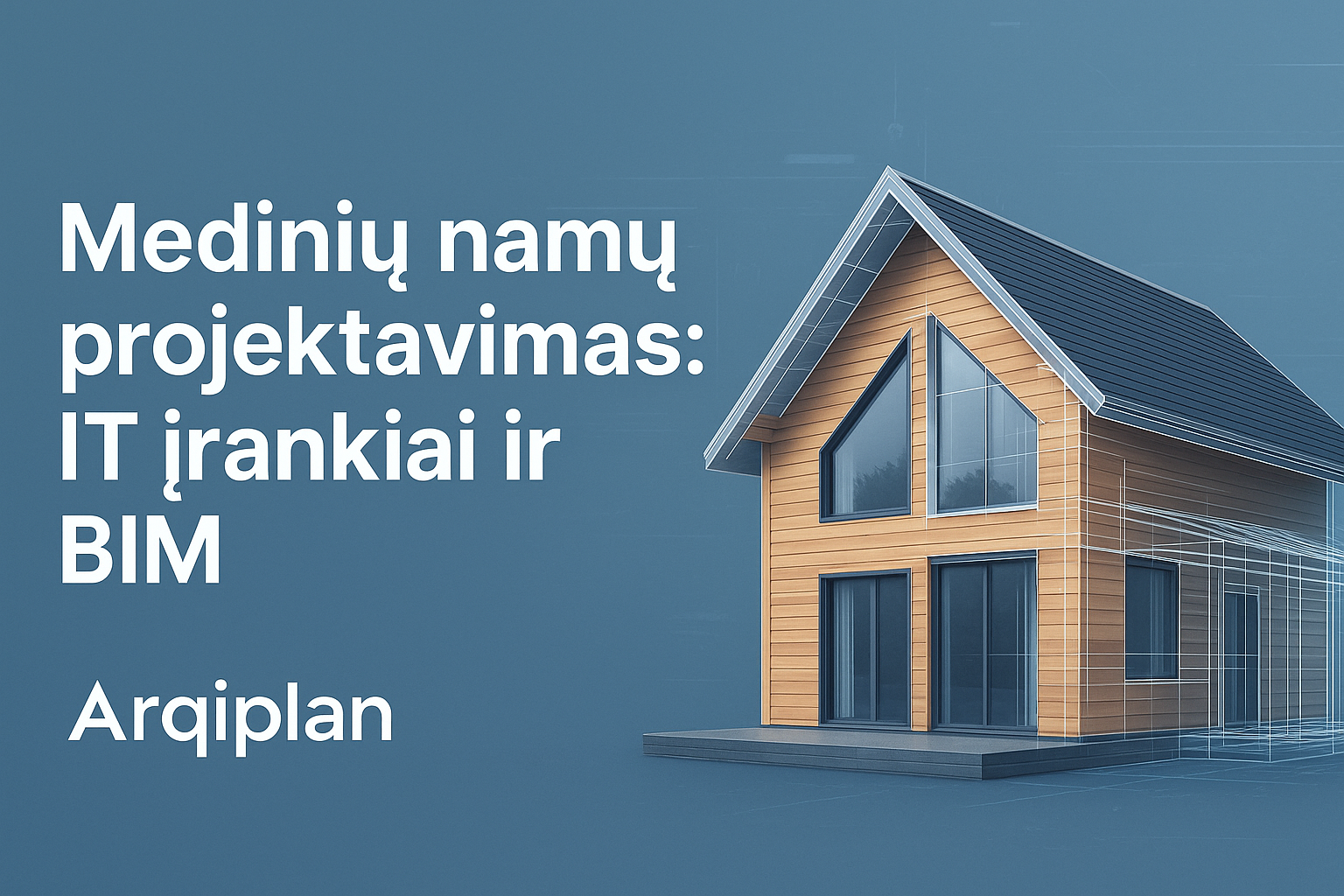
One of the key differences is the variability of natural wood properties. Wood is hygroscopic, reacts to environmental moisture, and can expand or contract. This means that when designing a wooden building, one must anticipate movement joints, deformations, joint behavior, thermal bridges, and more. Such aspects require high precision and reliable project documentation, which is increasingly generated digitally.
Digital measurement and modeling tools for wooden objects
Digital solutions are becoming an integral part of the design process. Architects, engineers, and constructors working with wooden buildings use:
- 3D laser scanning (LiDAR) – allowing for quick and precise measurement of existing structures or environments;
- Photogrammetry solutions, where objects are measured and modeled based on photographs;
- Structural modeling programs (e.g., Tekla Structures, Dlubal RFEM) with a wood module;
- Arqiplan – an automated plot and regulation analysis system that assesses whether a specific plot is suitable for a wooden structure, including possible height, density, etc.
Digital tools are becoming an integral part of wooden building design. They allow for precise modeling of joints and structural nodes, taking into account changes in wood properties. Before construction begins, the final result can be visualized, assessing fire risk, acoustic comfort, and energy efficiency. Additionally, such tools facilitate collaboration among all project participants—architects, constructors, and contractors.
BIM technology in wooden structure design
BIM (Building Information Modeling) is a methodology that allows for the creation of a digital building model, encompassing not only geometry but also technical parameters, structural properties, time, and costs. BIM becomes particularly important when working with wooden objects because:
- Wooden structures require greater detail accuracy than, for example, masonry or concrete structures;
- Project compatibility between disciplines (structures, electrical, ventilation) is very important because wooden structures have less tolerance for errors;
- Detailed production information (e.g., CNC cutting files) can be planned in advance detalią gamybos informaciją;
- BIM allows for the prediction of building operational scenarios and sustainability indicators.
Programs like Revit, Archicad, Tekla, and others allow for the generation of complete BIM models, which become the foundation for the entire construction process. By integrating this model with digital plot analysis platforms like Arqiplan, the entire design process becomes seamless: from plot selection to construction detailing.
The role of Arqiplan in wooden building design
Arqiplan not only helps automate plot analysis but also provides clear regulatory requirements: height limits, allowable building density, environmental restrictions, and the possibility of constructing residential or public buildings. All of this is especially important for wooden objects, which often have specific restrictions, especially in city old towns or protected areas.
Using Arqiplan, architects can:
- Make quicker decisions regarding plot suitability;
- Precisely plan building parameters even before starting modeling;
- Easily obtain project condition summaries or understand if a detailed plan is required.
Summary
The design of wooden buildings essentially becomes a digital process, where technologies—from laser scanning to BIM—take center stage. This approach not only increases project accuracy but also helps create sustainable, efficient, safe, and long-lasting structures. And with the Arqiplan tool, it all starts from the very first plot analysis—with just a few clicks.
Digital design + wooden buildings = future construction.